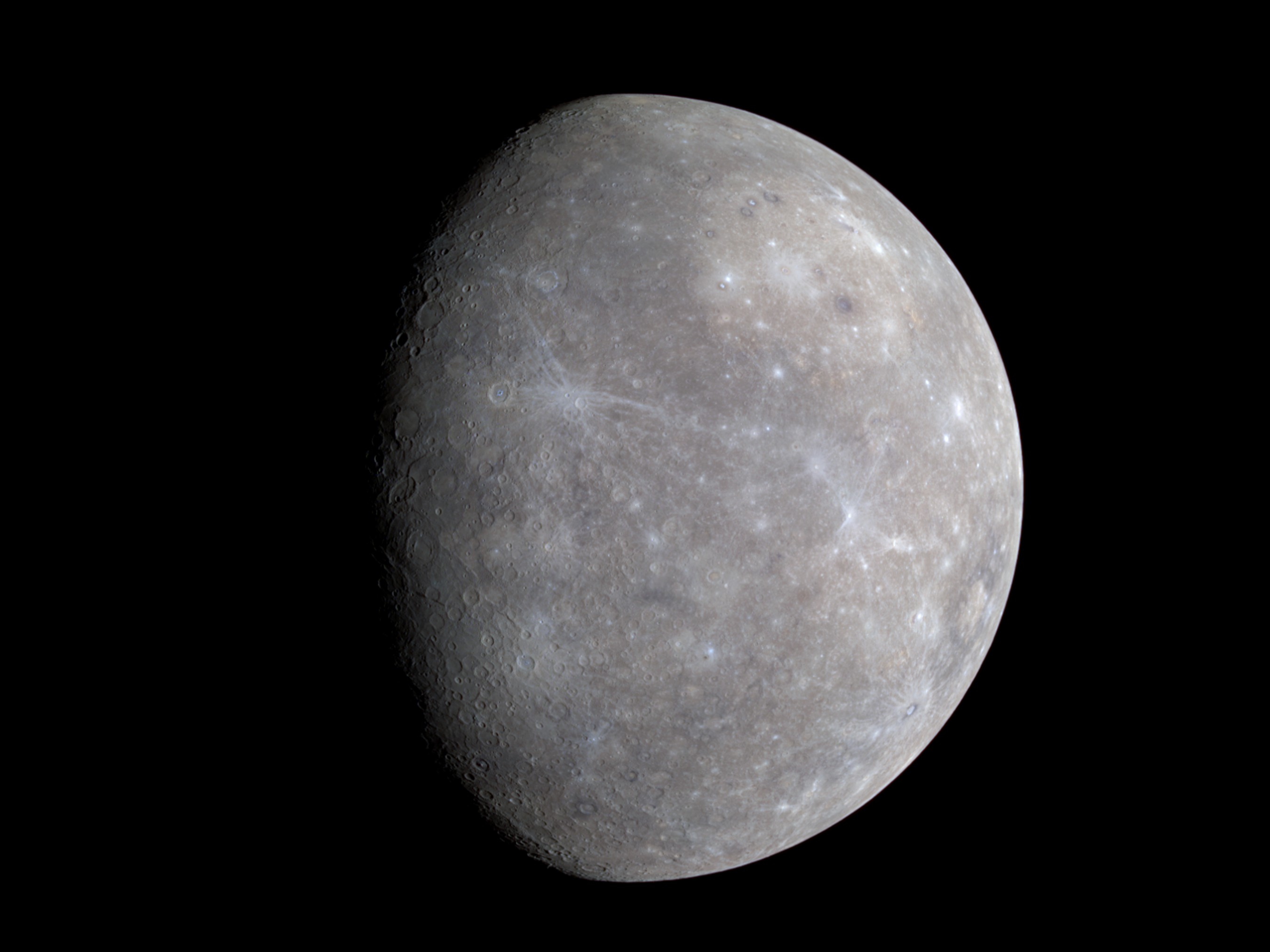
The BepiColombo mission, a groundbreaking collaboration between the European Space Agency (ESA) and the Japan Aerospace Exploration Agency (JAXA), was launched in October 2018. This ambitious mission aims to unlock the secrets of Mercury, the innermost planet of our solar system, and is composed of three main components: the Mercury Planetary Orbiter (MPO) by ESA, the Mercury Magnetospheric Orbiter (MMO or Mio) by JAXA, and the Mercury Transfer Module (MTM), which serves as the engine driving the spacecraft towards its destination.
The primary scientific operations of BepiColombo are slated to commence once the spacecraft successfully enters Mercury's orbit, which is expected to happen in November 2026. Until then, the mission has accomplished an impressive series of flybys, with BepiColombo having passed Mercury six times, Venus twice, and Earth once. These flybys have provided valuable data, including measurements of Mercury's magnetic environment.
During its journey, the MTM's monitoring cameras, known as M-CAMs, have captured hundreds of detailed images of Earth, Venus, and Mercury, showcasing features such as craters, volcanoes, and plains on Mercury's surface. This preliminary imaging has laid the groundwork for more in-depth studies that will be conducted by the MPO and Mio once they detach from the MTM in orbit around Mercury.
The scientific instruments on board the MPO and Mio are designed for advanced measurements. Mio will utilize a sodium imager and a dust detector to analyze the materials surrounding Mercury, while MPO aims to capture high-resolution images of the planet’s surface across various wavelengths, including X-rays, visible, and near-infrared light. Additionally, the BepiColombo Laser Altimeter (BELA) will provide precise measurements of Mercury’s surface height and shape. This combination of high-resolution imaging and detailed surface analysis is expected to reveal critical information about Mercury's composition, including the possibility of water presence.
In conclusion, the BepiColombo mission represents a significant step forward in planetary exploration, aiming to deliver a comprehensive understanding of Mercury, its materials, and its geological history. The mission's results have the potential to reshape our knowledge of Mercury and the early solar system, providing insights that will enrich scientific understanding for generations to come.