)
Kissing is often perceived as a uniquely human activity rooted in romance and social norms. However, recent research indicates that this behavior dates back much further than previously thought. A study published in the journal Evolution and Human Behavior proposes that kissing may have originated approximately 21 million years ago, with roots tracing back to the common ancestor of humans and other great apes. This groundbreaking research is the first of its kind to analyze the evolutionary journey of kissing across various primate species, revealing that this common gesture is significantly older than many believed.
Historically, the earliest documented evidence of kissing arose from ancient civilizations in Mesopotamia and Egypt, with references dating back at least 4,500 years. Because only 46% of all human societies are reported to engage in romantic kissing, many scientists assumed that it was a more recent cultural practice. Yet, the latest findings suggest that kissing may have been established millions of years prior. Observations of kissing behavior in chimpanzees, bonobos, and orangutans offer evidence of its long-standing existence among primates, with indications that Neanderthals may have practiced it as well. A notable study highlighted the shared oral bacteria between early Homo sapiens and Neanderthals, suggesting prolonged mouth contact between these species after their divergence.
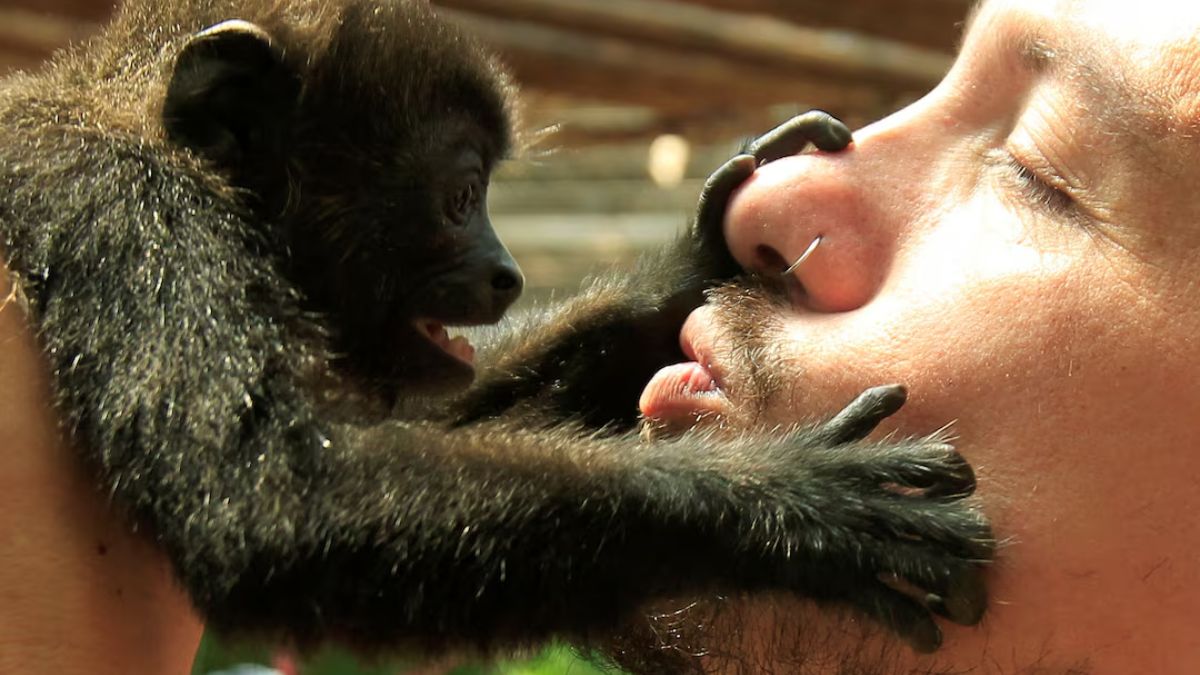
Dr. Matilda Brindle from the University of Oxford, leading the investigation into the origins of kissing, described it as an evolutionary paradox, since it seems to lack direct survival benefits and could potentially risk pathogen transmission. To address this, Brindle and her team defined kissing as friendly mouth-to-mouth contact involving lip movement, sans the exchange of food. This definition resulted in surprising examples of similar behaviors not only in primates but also in animals such as wolves, prairie dogs, polar bears, and albatrosses.
Their research revealed an evolutionary connection, showing that the roots of kissing could be traced back to a shared ancestor with great apes around 21 million years ago, predating any form of human civilization.
As for the reason behind the evolution of kissing, Dr. Brindle proposed two main hypotheses. One possibility is that sexual kissing may enhance reproductive success by allowing individuals to evaluate mate quality. Bad breath, for instance, could lead to the decision against reproduction. Additionally, sexual kissing might promote sexual arousal, positively influencing post-copulation success and creating an environment conducive to sperm survival.
The second hypothesis suggests that non-sexual kissing evolved from the grooming behavior commonly observed in primates. It serves to build social bonds and alleviate tension within groups. For instance, chimpanzees often "kiss and make up" after conflicts, highlighting its role in repairing social relationships. Researchers agree that while the social aspect of kissing is significant, the sexual dimension remains a point of speculation.
Ultimately, the study asserts that kissing is an evolved behavior rather than a mere cultural invention, revealing the deep evolutionary roots of this widely recognized act. Understanding the origins of kissing enhances our perception not only of human behavior but also of our connections with the broader animal kingdom.