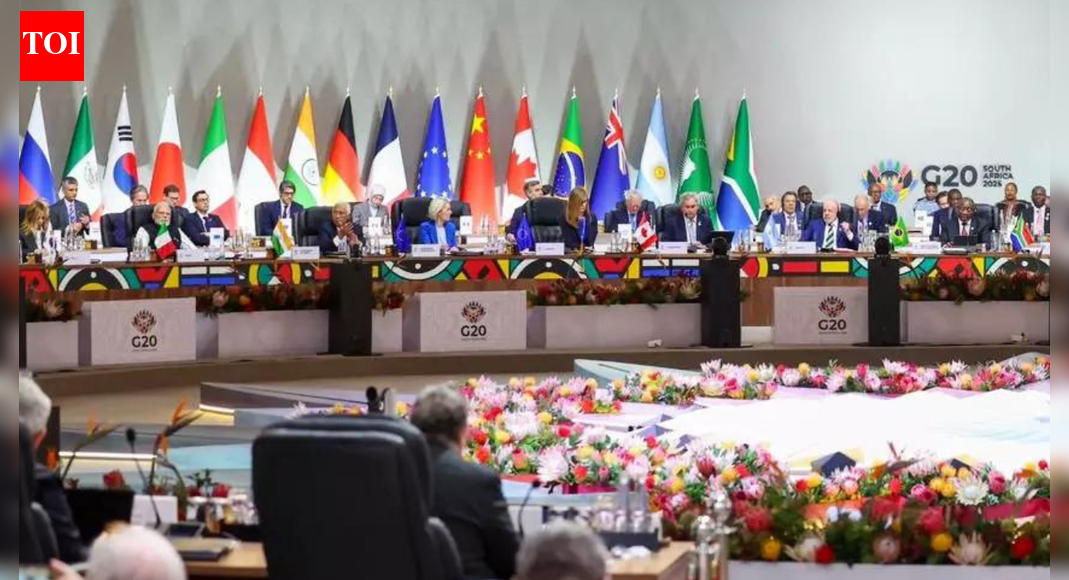
During a significant meeting in South Africa, the G20 bloc achieved a momentous consensus on a climate change declaration, a decision that was made without the participation of the United States. The USA chose to boycott the summit due to ongoing diplomatic tensions with South Africa, primarily over disagreements regarding the declaration's wording, as noted by South African President Cyril Ramaphosa. Despite these challenges, the declaration was adopted early in the summit proceedings, signaling robust support from the attending nations.
Ramaphosa expressed pride in the overwhelming agreement among world leaders on the climate declaration, emphasizing that it was non-negotiable. According to his spokesperson, this early adoption marked an unusual but necessary step given the strong consensus.
In parallel to this development, Indian Prime Minister Narendra Modi attended the summit, advocating for inclusive and sustainable growth. He expressed the importance of revisiting development measures to ensure they align with global sustainability goals. Modi engaged in dialogues with several world leaders, reflecting India’s pivotal role in fostering international cooperation on climate issues.
The absence of President Donald Trump, who objected to the agenda focused on climate action, highlighted a rift in global climate policy perspectives. The declaration's references to climate change appeared to counter the U.S. administration’s skepticism towards the reality of human-induced environmental challenges. By adopting this declaration, participating nations underlined their dedication to scientific perspectives on climate change, despite the U.S.'s previous resistance.
In conclusion, the G20 summit showcased a critical moment for international unity on climate actions, signaling a potential shift in global agriculture and energy policies, while also reflecting underlying geopolitical tensions that impact diplomatic cooperation.