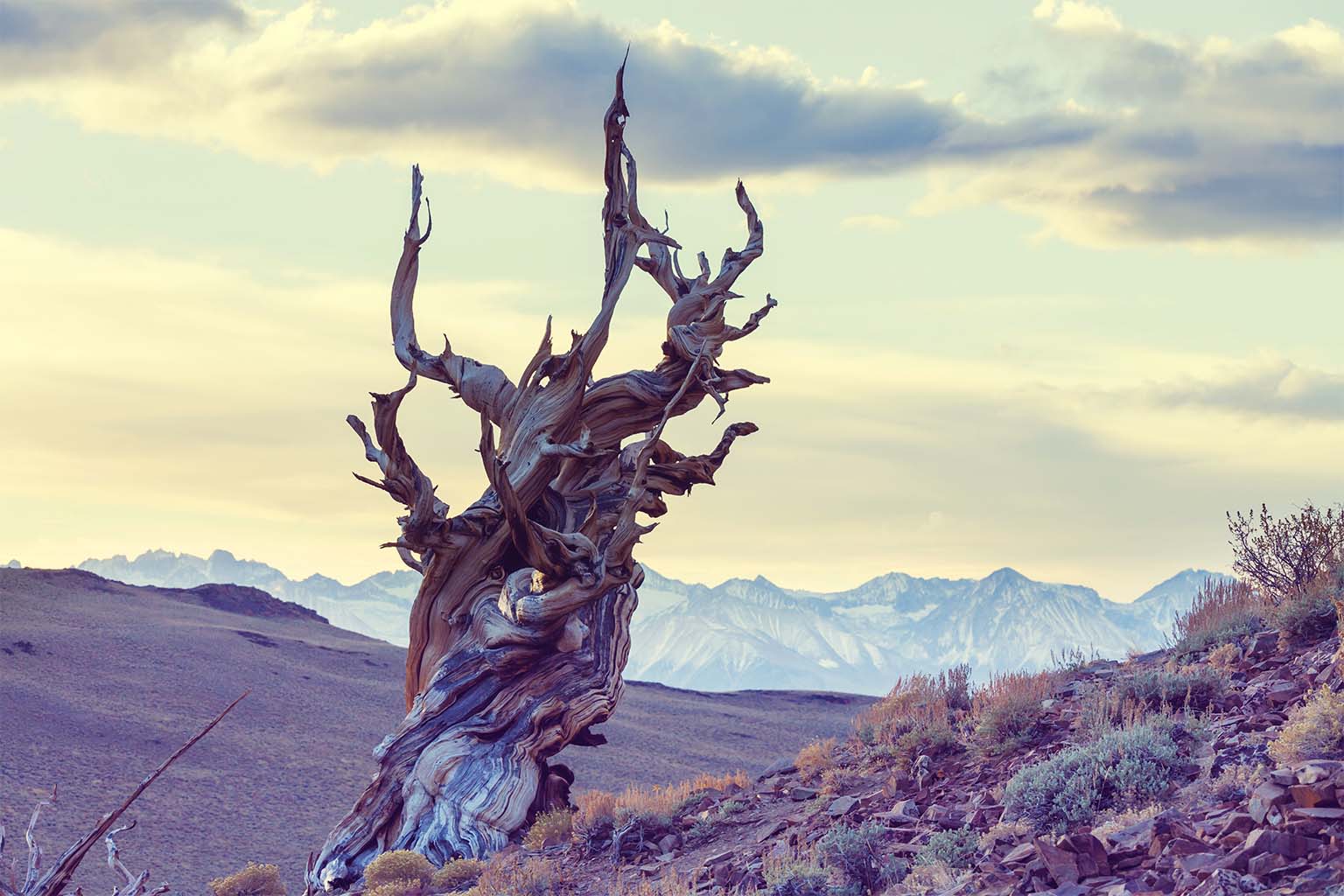
In the remote expanse of California's White Mountains stands Methuselah, a remarkable bristlecone pine tree valued for its impressive age of nearly 4,800 years. This tree is a living record of time, having existed long before significant historical milestones, including the construction of the Egyptian pyramids. Methuselah's existence offers a glimpse into the resilience of nature and serves as a symbol of longevity in a harsh environment.
The history of Methuselah began when dendrochronologist Edmund Schulman embarked on a quest in 1953 to uncover the oldest trees. Using an increment borer, Schulman and his team ventured into a secluded grove, a habitat where few trees can endure. Upon extracting a core sample from a bristlecone pine, they were astonished to discover that the growth rings indicated the tree's age to exceed 4,800 years. This finding solidified Methuselah's position as the oldest known non-clonal tree worldwide, existing as a singular living organism with an ancient lineage unmarred by cloning.
To safeguard this ancient treasure, the U.S. Forest Service opted to keep Methuselah's exact location confidential, thereby preventing potential damage from curious adventurers and vandalism. This mystery surrounding the tree only enhanced its allure, leading to the establishment of the Methuselah Trail, where hikers could appreciate the great tree without ever locating it. However, in 2021, images surfaced online revealing the tree, further igniting public fascination while experts stressed the importance of maintaining its natural habitat.
Despite Methuselah's prestige, it faces competition from other venerable trees. In Chile, Gran Abuelo, a Fitzroya cupressoides, is estimated to be over 5,400 years old. However, variations in its core structure prevent a definitive age being established through standard scientific methods. Additionally, the tragic story of Prometheus, another ancient bristlecone pine, illustrates the risks faced by such trees; this specimen was unintentionally felled in 1964 by researchers, revealing it to have lived an incredible 4,862 years, potentially surpassing Methuselah.
The study of ancient trees like Methuselah presents unique challenges, where researchers must navigate the intersection of scientific inquiry and conservation. Modern methodologies emphasize the use of non-invasive techniques, such as satellite ecological monitoring and advanced growth ring modeling, to minimize disruption to these invaluable living relics. These ancient trees not only symbolize endurance but also act as crucial components of a delicate ecological system that requires protection.
Methuselah and its counterparts encourage a moment of reflection on our natural world and the pressing need for responsible stewardship. The legacies of these trees yield invaluable insights into our ecological past and inspire future conservation efforts. As observers of these antiquities, we are prompted to consider how we can harmonize our thirst for knowledge with the imperative of preserving these extraordinary natural wonders for future generations.